

Key takeaway: The October 12 NYT Sports Connections puzzle tests regional knowledge and niche player trivia. Success requires linking DC-based franchises like the Capitals and Commanders while identifying specific NFL cornerback nicknames such as Sauce and Kool-Aid. Mastering these lateral associations is vital, as the grid features a 2.5/5 difficulty rating involving tricky basketball-related prefixes and famous athletes named George.
The NYT Sports Connections puzzle presents a fresh 16-word grid every day at midnight, challenging fans to find four hidden groups. Many players struggle to identify the correct associations when multiple terms seem to fit into several categories at once.
This article provides the specific hints needed for the October 12 puzzle and breaks down the stats logic used to solve these daily challenges. We will help you spot the red herrings and master the color coded difficulty levels to protect your four mistake limit.
- NYT Sports Connections Hints for the October 12 Puzzle
- Deciphering Stats Logic and Performance Metrics
- How Do Designers Build Tricky Categories?
- Platform Availability and Daily Game Mechanics
NYT Sports Connections Hints for the October 12 Puzzle
The October 12 NYT Sports Connections puzzle features a mix of NFL passing stats, NBA franchise geography, and iconic stadium monikers. Success hinges on separating specific yardage metrics from broader team nicknames.
The grid’s composition today is a real test of your athletic knowledge, leading us straight into the specific themes of this 16-word challenge.
Identifying Today’s Grid and Daily Theme
The October 12 challenge, specifically Puzzle Number 755, presents a complex 16-word layout. It demands sharp focus to avoid early mistakes in this daily sports-themed mental exercise.
The grid layout today is dominated by primary sports like professional football and basketball. Words appear scattered, mixing player names with geographical identifiers and specific technical terms.
There is a significant thematic overlap between the groups. You will notice numbers and names competing for your attention. This setup prepares you for the first tactical solve.
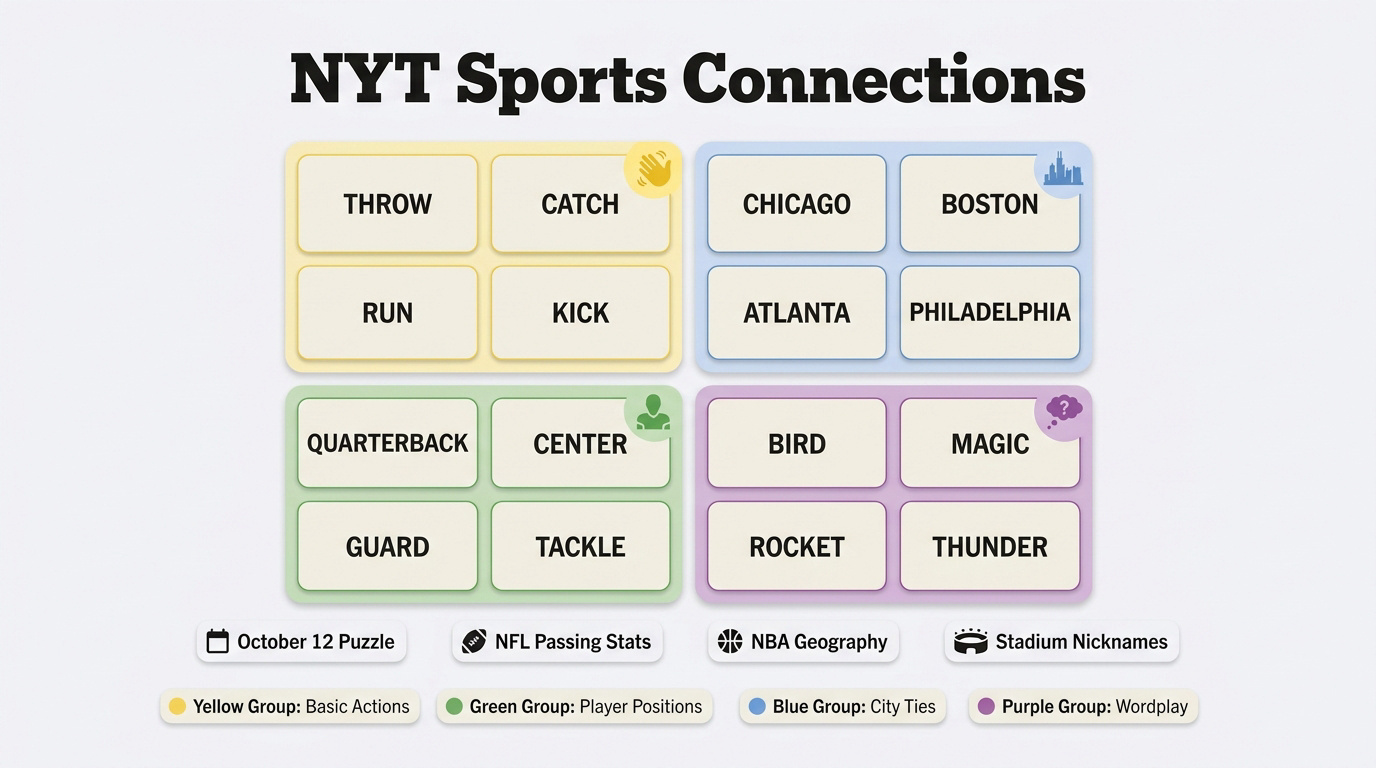
Categorization Clues for Yellow and Green Groups
To find the yellow group, look for straightforward associations. Think about teams that share a single home city. It is the most direct link on the board.
For the green category, shift your focus to a common bond. These words share a famous first name found across different eras.
Look for fragments like Spirit, Wizards, or names like Foreman and Kittle. These belong in the easiest tiers of the current puzzle grid.
These two groups are your starting point. They share a common bond based on literal geography or simple naming conventions rather than complex wordplay.
Advanced Hints for Blue and Purple Tiers
The blue tier requires knowledge of stadium nicknames and specific defensive player identities. Look for words that sound like food or electronics but actually represent NFL cornerbacks.
To crack the purple group, you must identify abstract connections. Think about a specific basketball action and the different words that can precede it to describe a move.
This section uses tricky logic and linguistic traps. One word might look like a team name, but it actually completes a common sports phrase or identifies a stadium.
Deciphering Stats Logic and Performance Metrics
While the general theme sets the stage, the real challenge lies in the specific numbers and names that define professional excellence.
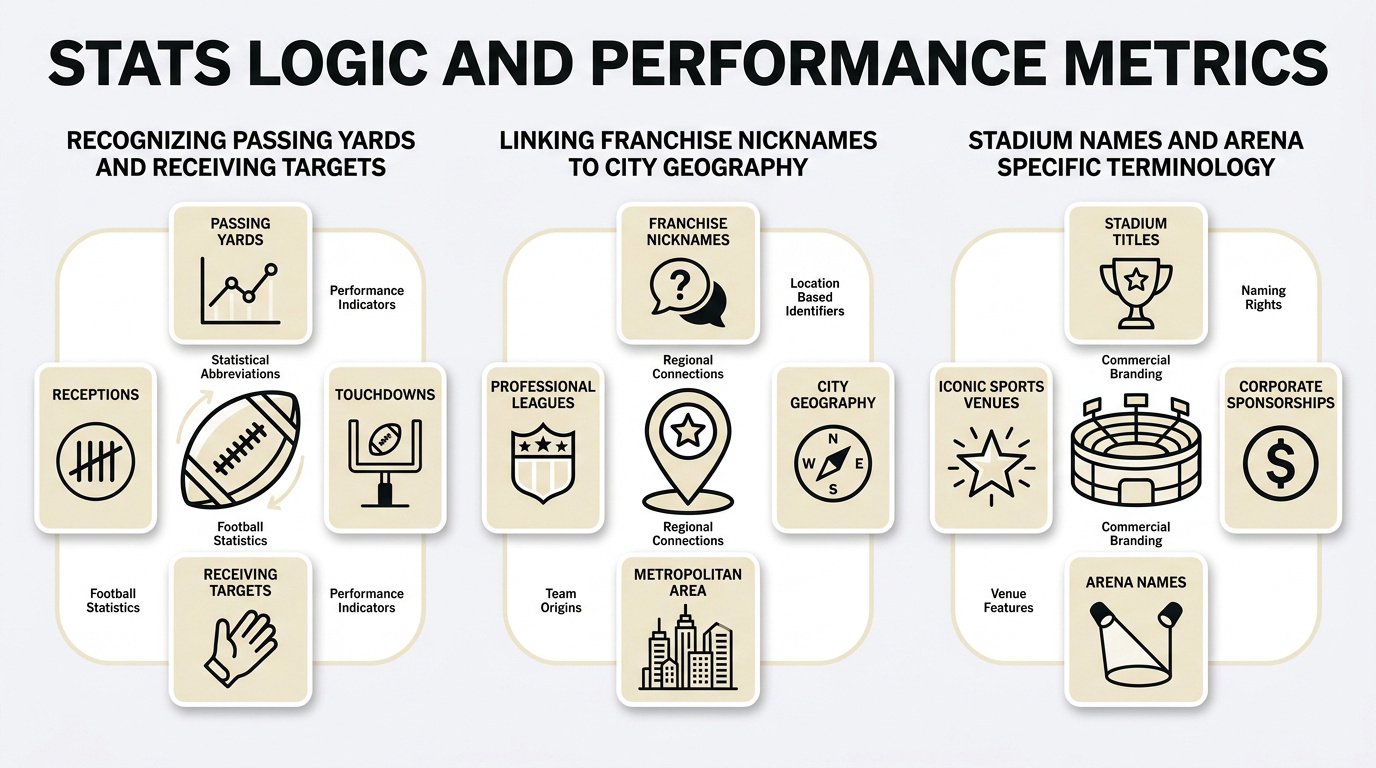
Recognizing Passing Yards and Receiving Targets
Analyze football statistics in the grid. Yards and targets are often grouped together. Use performance indicators to spot these links.
Identify terms like receptions and touchdowns. These function as specific metrics for players. They often cause confusion with other sports. Use football statistics and touchdowns to narrow your choices.
Watch out for statistical abbreviations. These shortened terms often trip up casual fans. Keep the explanation brief and focus on the role.
Linking Franchise Nicknames to City Geography
Break down the logic of city-based groupings. Focus on the metropolitan area to find connections.
Look for cohesive franchise nicknames. These form a set based on their home city. Think of Washington or Oklahoma examples.
Distinguish between professional leagues and college teams. Mixing them is a common trap for many players.
Geography matters in this puzzle. It effectively links diverse sports together through city geography and shared regional identities.
Stadium Names and Arena Specific Terminology
Connect iconic sports venues to their respective cities. Many words serve dual purposes in the grid. This requires careful observation.
Identify words that act as nouns and stadium titles. This creates significant overlap for the player. Consider the impact of corporate sponsorships on these names.
Isolate these terms from player names. Look specifically for the arena names context. This helps in solving the more difficult categories.
How Do Designers Build Tricky Categories?
Understanding the data is only half the battle; one must also anticipate the clever traps set by the game’s architects.
Spotting Red Herrings and Overlapping Sports Terms
Designers use red herrings to mislead players. These are words fitting multiple groups. They create false paths that look obvious at first glance.
Consider overlapping sports terms like “Diamond” or “Quarter.” These words apply to baseball and basketball simultaneously. This ambiguity forces players to pause and rethink their initial choices.
Finding the correct logic path requires patience. Look for the outlier that only fits once. Isolate the unique connection before committing to a final selection.
Decoding the Logic of the Purple Category
The hardest tier relies heavily on wordplay. Homophones are a favorite tool for this level. They trick the brain by focusing on sound rather than literal meaning.
Many categories use prefixes or suffixes. A purple category might link “Max” to various athlete names. These groups require lateral thinking rather than just raw sports trivia.
Success involves thinking outside the box. The puzzle often moves beyond simple athletic facts. It becomes a linguistic challenge where sports terms serve as mere building blocks.
Managing the Four Mistake Limit Effectively
Respect the four mistake limit carefully. Do not waste attempts on random guesses. Every click must be backed by a clear, defensible theory.
Use the shuffle button frequently. It breaks fixed cognitive patterns. Seeing the words in a new order often reveals hidden links you missed.
Decide when to commit to a guess. If you are stuck, step away for a moment. Fresh eyes often dismantle stubborn cognitive patterns instantly.
Patience is the core of effective management. Rushing leads to quick failure. Take your time to ensure the NYT Sports Connections Hints: How the Puzzle Uses Stats Logic lead to a win.
Platform Availability and Daily Game Mechanics
Beyond the strategy, knowing where and when to play ensures you never miss a daily challenge.
Accessing the Puzzle via the NYT Games App
You can find the standard version within the NYT Games app. However, the specific sports edition currently lives on The Athletic website. It remains in beta for now.
Your daily puzzle resets occur at midnight in your local time. This timing adapts across various time zones automatically. You get a fresh grid every single day without fail.
The user interface stays consistent but feels different on mobile. Web browsers offer a wider view of the sixteen words. The app provides a more tactile, handheld experience.
Understanding the Color Coded Difficulty Levels
Each color coded difficulty tells a specific story. Yellow groups represent the most straightforward connections. Purple groups are the hardest and often require abstract thinking.
The difficulty levels scale as you solve the grid. Trivia depth increases from basic team names to obscure player nicknames. You must recognize patterns that others might easily overlook.
Professional game designers assign these colors based on data. They analyze how many players are likely to fail. This ensures the challenge remains fair but very tough.
Similar Daily Trivia Challenges for Sports Fans
Fans often flock to the Immaculate Grid for a different thrill. Poeltl is another great option for those who love guessing players. Both keep your brain sharp between puzzles.
These sports trivia challenges differ greatly from crossword puzzles. You aren’t hunting for clues in a list. You are organizing a chaotic mess of sixteen different terms.
A sports media partner like The Athletic adds serious credibility. This collaboration brings niche knowledge into the daily rotation. It makes the NYT Sports Connections Hints: How the Puzzle Uses Stats Logic feel authentic.
Mastering NYT Sports Connections requires blending pattern recognition with deep athletic knowledge. By analyzing performance metrics and geographical ties, you can navigate the grid’s logic before mistakes mount. Sharpen your strategy now to dominate tomorrow’s challenge with statistical precision and expert intuition.
FAQ
How does the logic of stats influence the NYT Sports Connections puzzle?
The game frequently utilizes performance indicators to group words, requiring players to recognize specific metrics. For instance, a category might focus on football statistics for a wide receiver, linking terms like receptions, targets, touchdowns, and yards into a single cohesive set.
Success depends on your ability to identify these statistical abbreviations and separate them from other sports jargon. By understanding how metrics define excellence in leagues like the NFL, you can navigate the grid’s thematic overlap more effectively.
What are the specific categories for the October 12 puzzle?
The October 12 challenge, known as Puzzle Number 755, features diverse groupings ranging from geography to specific athlete monikers. The primary sports covered include basketball, football, and hockey, with a grid layout that blends literal terms with clever wordplay.
Key groups for this date include DC sports teams (Capitals, Commanders, Spirit, Wizards), basketball court locations, and NFL cornerback nicknames such as Sauce and Kool-Aid. The difficulty scales from these straightforward associations to more abstract linguistic tricks.
How do the color-coded difficulty levels work in the game?
The color coded difficulty system helps players gauge the complexity of the connections they are looking for. Yellow represents the easiest tiers with direct associations, while green and blue offer moderate difficulty levels involving deeper trivia depth or specific league knowledge.
The purple category is the most challenging, often requiring lateral thinking or thinking outside the box. These groups usually involve wordplay, such as prefixes or hidden patterns, rather than literal sports facts, according to the game designers.
Can you explain the “Original Six” and geographic categories?
Geographic logic often links franchise nicknames to a specific metropolitan area, such as grouping teams from Oklahoma or Washington D.C. This requires players to distinguish between professional leagues and collegiate programs that share a home city.
Historical groupings like the Original Six NHL teams (Blackhawks, Canadiens, Maple Leafs, Rangers) test a player’s knowledge of iconic sports venues and league origins. Recognizing these sets is vital for avoiding red herrings that might fit into multiple categories.
What is the best way to manage the four-mistake limit?
To handle the four mistake limit, players should avoid impulsive guessing and instead look for the logic path that leaves no word behind. Using the shuffle button is an effective way to break cognitive patterns and see new connections within the grid layout.
If you find yourself stuck, effective management of your attempts involves stepping away or looking for overlapping sports terms that might be traps. Patience is key, as rushing often leads to depleting your lives on red herrings before the final categories are revealed.
Where can I play NYT Sports Connections and when does it reset?
The game is accessible via the NYT Games app and web browsers, offering a seamless user interface for daily players. It is part of a broader suite of sports trivia challenges, often appearing alongside other popular titles like Immaculate Grid.
The daily puzzle resets occur at midnight local time, ensuring a fresh 16-word challenge every 24 hours. Whether you are a fan of crossword puzzles or deep statistical analysis, the game provides a consistent daily test of your athletic knowledge.