
Gels, powders, bars and pre-workout mixes crowd the shelves. Most promise a performance edge. The evidence says the edge is small, and the risks are easy to miss. This guide explains what counts as a sports nutrition product, what they can and cannot do, and how to choose with care.
- Sports supplements add a small gain on top of training, sleep and food.
- Supplements sit outside food and drug rules in Canada, so quality varies.
- Third-party certification marks are the best shortcut to a safer choice.
What counts as a sports nutrition product?
Sports nutrition is the practice of using food and fluids to keep performance up. It covers the type and the quantity of what an athlete consumes. The nutrients involved are vitamins, minerals, carbohydrates, proteins and fats.
Products fall into two broad groups. Some are ordinary foods used well. Others are supplements made for athletes.
Sports supplements include:
- Sports gels
- Powders
- Carb drink mixes
- Energy bars
- Creatine
- Pre-workout blends
- Beta-alanine
Supplements are also called natural health products or dietary supplements. They are a wider category than sport products alone. It also takes in herbal remedies, homeopathic items, amino acids, fatty acids and weight-loss products.
Your own needs shape what makes sense. Type of activity, body size, gender, the stage of a workout and the time of day all play a part. Aerobic and anaerobic efforts ask different things of your fuel.
How much do these products really improve performance?
The honest answer is: a little. Studies on certain supplements show a 1-3% improvement in some kinds of athletic performance. Caffeine, beta-alanine, creatine and nitrates are among the examples. The gains show up in strength, endurance and sprint work.
That figure needs context. Many other things shape how you perform:
- Sleep
- Training
- Diet quality
- Recovery
- Motivation
- Mental health
- Equipment
- Access to coaching
- Social support
- Funding
Next to that list, supplements are the tip of the iceberg. They feel appealing because they are easy and convenient. A possible gain with no extra training hours is hard to ignore.
Keep the order of priorities straight. Fix sleep, training and food first. Treat supplements as a last, small layer.
Supplements also have clear uses outside performance. They can correct a nutrient deficiency. They can support a diet that limits certain nutrients, such as a vegan diet or lactose intolerance. They can help with some medical conditions. A medical professional can tell you whether the benefits outweigh the risks for you.
Do you need protein and carbohydrate products?
Often, food does the same job. The key to a sound diet is variety. You want a balance of macronutrients, vitamins and minerals.
Protein
Endurance athletes need more protein than people who do not train. Research suggests 1.2 to 1.4 g of protein per kg of body weight to repair damaged tissue. If you eat too few calories overall, the body breaks down lean tissue for energy and repair. Signs of too little protein include early and extreme fatigue, long recovery and slow wound healing.
Complete proteins such as meat, eggs and soy give you all the essential amino acids. Vegetarian and vegan athletes often pair legumes with a whole grain across the day. Rice and beans is a common pairing. A protein powder is one convenient option, but it is not the only route.
Carbohydrates
After short, explosive efforts, glycogen stores need refilling. Athletes often take in plenty of carbohydrate straight after exercise. High-glycemic-index carbohydrates are preferred for raising blood glucose quickly. Protein or amino acids are usually added to support protein synthesis. Branched-chain amino acids are the ones most responsible for that synthesis.
For daily training, one source advises unprocessed or whole-grain carbohydrates. They give fuel, nutritional value and fullness. Fruits and vegetables add vitamins and minerals lost through exercise. Eating them in natural form, without added sugar, gives the most value.
Gels, carb mixes and bars fit best where convenience matters, such as during long sessions or right after them.
Why is supplement quality a concern?
They are not classed as food or drugs. The Canadian Food and Drugs Act does not regulate them.
That leaves the industry with little government oversight. Little regulation and testing opens the door to several problems:
- False claims
- Contamination
- Mislabelling
Anyone subject to testing under the World Anti-Doping Agency (WADA) must take extra care. It does not matter how a prohibited substance entered the body. A positive test carries serious consequences and can end a career.
Advice habits are a weak point too. The Canadian Centre for Ethics in Sport reports that 87% of athletes use supplements. Only 4% ask their doctors. Just 0.8% consult a Registered Dietitian.
A friend’s tip is not a safety check. A professional can give evidence-based advice for your sport.
How can you choose safer sports nutrition products?
Start with a professional. A medical professional or sports dietitian can weigh the risks and point you to products with real potential in your sport.
Then look for independent testing marks. Three programs are worth knowing.
- Informed Choice: tests for banned substances and impurities. It randomly samples supplement batches and checks them intensively.
- Informed Sport: uses the same testing procedures and technologies. It tests every single batch before the product reaches the market.
- NSF International Certified for Sport: provides independent testing and certification. It checks that products hold no unsafe levels of contaminants, no prohibited substances and no masking agents. It also checks that contents match the label.
Both Informed programs test for all WADA banned substances. You can search the program websites for a specific brand to see whether it is certified.
A short checklist before you buy:
- Ask whether you need the product at all.
- Check for a certification logo on the pack.
- Confirm the exact product in the certifier’s database.
- Talk to a professional if you are tested or have a medical condition.
Buy the product that is certified, not the one with the boldest claim.
Related reading
Sources
- Choosing Safe Sport Supplements (heathernoblenutrition.ca, accessed 2026-11-24)
- Sports nutrition — Wikipédia (en.wikipedia.org, accessed 2026-11-24)
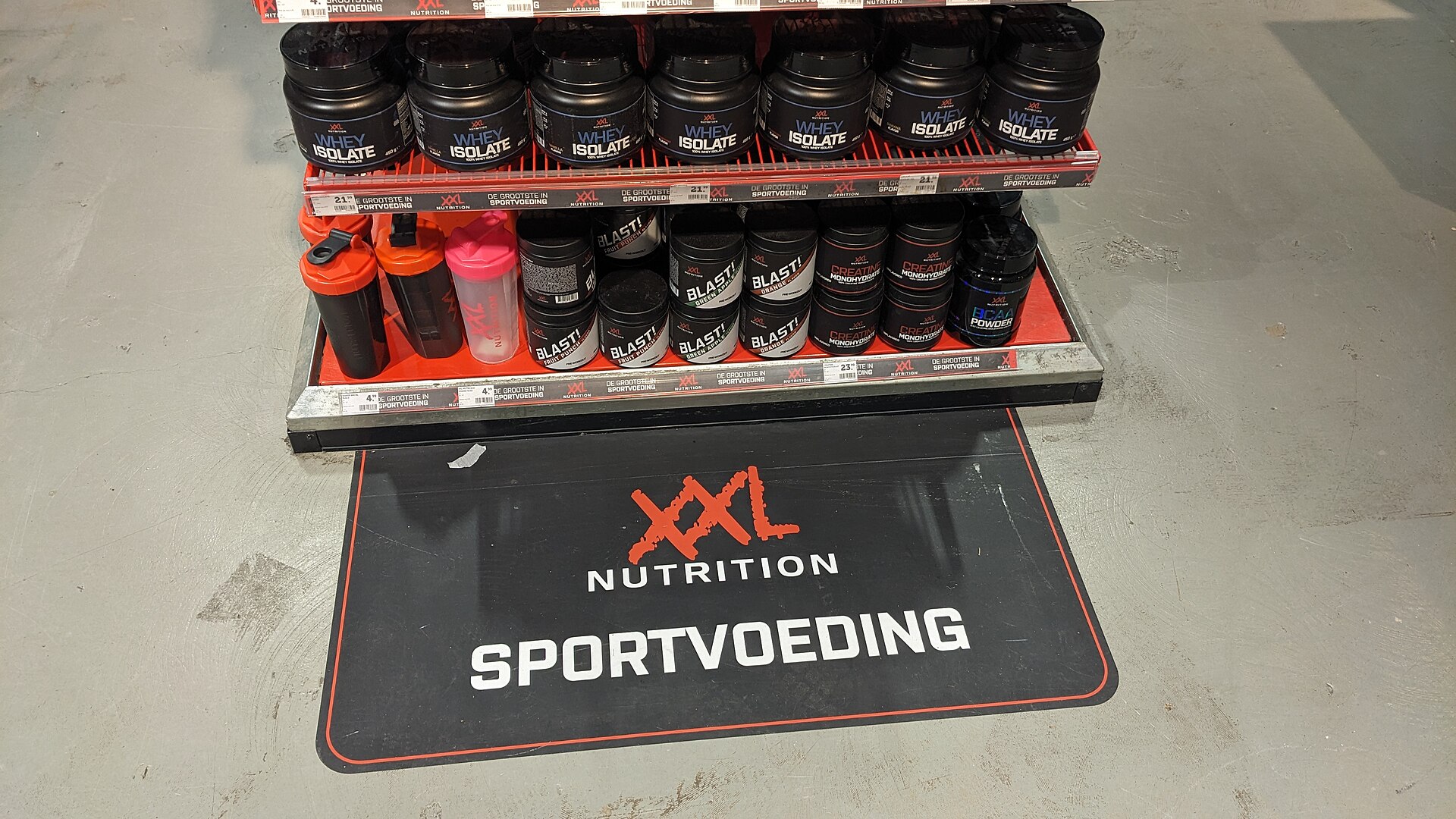
Photo: XXL Nutrition Sportvoeding (Coop), Kralingen-Crooswijk, Rotterdam (2024) 01, by Donald Trung Quoc Don (Chữ Hán: 徵國單) – Wikimedia Commons – © CC BY-SA 4.0 International. (Want to use this image?) Origi, CC BY-SA 4.0 (Wikimedia Commons)